Understanding Minneapolis’s Concrete Climate Challenges
Concrete makes up a large part of critical infrastructure because of its durability, cost-effectiveness and flexible design aesthetics. If you’ve recently had a concrete driveway, floor or patio installed on your residential or commercial property in Minneapolis, you’ll want it to remain in this like-new condition for as long as possible.
Use these seasonal concrete care instructions to protect driveways, floors and patios and keep them looking good for years.
Understanding Minneapolis Climate Changes
Minneapolis’s continental climate brings extended cold snaps, midwinter warm-ups and high moisture conditions that stress concrete thermally and through water exposure.
As part of the manufacturing, mixing and pouring process, concrete develops various pores, such as gel, capillary and air voids. Water infiltrates and saturates these pores. When it freezes, expanding ice creates hydraulic pressure that forms microcracks and deepens damage over time. Local frost-susceptible silts and clays worsen movement.
Repeated freeze-thaw cycles cause a progressive loss of concrete strength, leading to cracking and chunks falling off, also called spalling. Deicing salts keep surfaces wet thanks to the lower freeze temperature and allow deeper brine penetration.
Seasonal Concrete Care Guide
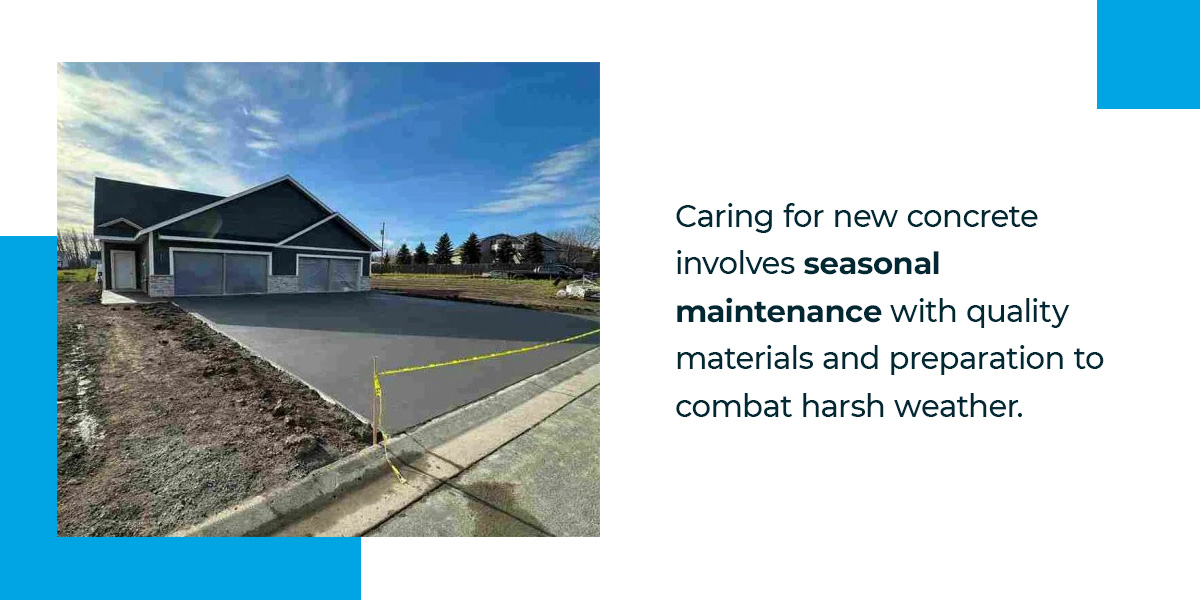
When considering how to care for new concrete, seasonal maintenance using quality materials and preparation are key factors. There’s nothing you can do about the weather, but you can prepare your concrete surface to stand up against any harsh conditions the climate brings. If you’re consistent in these care routines and fix minor problems as they occur, your concrete will remain in excellent condition.
Spring Care
As the icy world of a Minneapolis winter melts away, you’ll want to do a post-winter damage assessment for your concrete floor care. This assessment should include:
- Crack inspection and repair: Look for corner breaks, cracks and surface distress. Call a professional if coarse aggregate shows, cone-shaped pits appear or one slab edge is higher than the other.
- Cleaning winter residue: Thoroughly clean the concrete to remove muddy films left by meltwater, organic debris, deicers and any other abrasives that have built up.
- Review drainage and edge support: Clear your downspouts and extend them far enough so that water doesn’t pool on the concrete surface. If there are gaps by the slab’s edges, contact a professional to fill them in.
Summer Care
Summer is the best season for working on your concrete. Warm weather makes it easier to complete the following checklist:
- Deep cleaning and maintenance: Vacuuming, sweeping, pressure washing and using targeted pH-neutral cleaners will ensure the surface is ready for sealing.
- Sealing: A breathable, penetrating silane or silane and siloxane blend is the best concrete sealer for Minnesota’s cold weather. It’ll protect your concrete from moisture infiltration, and doing it in summer will give it the time it needs to dry.
- Intensive repair work: If you have large cracks or other surface defects you didn’t repair during the spring, schedule professional repairs now so you don’t need to rush fall preparation.
Fall Preparation
Fall is about planning your protection, so doing these three tasks will get you prepared for winter:
- Make a winter snow plan: Map out snow storage zones away from concrete, set driveway or sidewalk edge markers to ensure edges are safe from tools, and stock up on nonchloride traction aids, like sand.
- Protect vulnerable areas: You can place mats to protect the concrete in areas exposed to salty meltwater, like where your tires sit on the driveway.
- Document: If some uneven joints or cracks haven’t been repaired, take baseline photos, note the widths of cracks and mark any uneven joints with tape or paint so you can compare the difference in the spring.
Winter Protection
Working on concrete is a safety hazard due to the icy, wet conditions. Anything you haven’t already addressed can wait until spring. In the meantime, you can continue to protect your concrete by doing the following:
- Remove snow regularly: Keeping the area clear will prevent moisture saturation and cut melt and freeze cycles.
- Use safe de-icing practices: Shovel your slab with rubber-edged or plastic shovels. Use washed sand or grit instead of chemical deicers, especially during the first winter.
- Monitor: Track any new cracks and note where the snow and meltwater gather most.
Professional vs. DIY Concrete Care
To determine when you need a professional or can do it yourself, you’ll have to weigh your knowledge, skill and confidence against the expense of professional Minneapolis concrete repair. While sometimes it’s fine to do it yourself, at times you’ll need extra help and deep knowledge of concrete to ensure the job is completed correctly.
When Should You Call the Professionals?
Wide, growing cracks, spalling, delamination, and uneven slabs are complex repairs that point to structural issues requiring concrete installation experience. If there are small cracks over a wide area, it’s best to contact a professional, as they’ll have the workforce, materials and tools to diagnose the cause and fix everything efficiently.
What Are DIY-Friendly Tasks?
Basic cleaning and power washing are two simple ways to maintain your concrete. You should inspect it regularly and use epoxy or polyurethane to fill in hairline cracks.
What Makes a Quality Minneapolis Contractor?
When searching for a concrete contractor, speak to friends and family who have had concrete work done to get a recommendation. You can then check the company’s reputation through customer reviews and explore their service pages. If a company has excellent reviews, thorough experience and extensive concrete services, contact them to learn more.
Learn More About Concrete Surfaces
The following advice is more specific to different concrete areas. Depending on whether the concrete is indoors or outdoors, you’ll need to adjust your approach.
How to Care for Concrete Floors
Caring for concrete floors in basements and garages requires preventing stains from household chemicals and oils. Use mats or rugs in high-traffic areas or under vehicles to catch oil drips.
How to Care for Concrete Driveways
Follow a professional resealing schedule every three to five years, depending on exposure and traffic. Use tools that don’t scrape the concrete.
Contact idcAutomatic for Professional Concrete Care
If you’re unsure how to address an issue with concrete driveway care, need help with your new interior floor or have other concrete needs, contact idcAutomatic. We’re committed to quality work. With more than 50 years of experience, you can trust us for concrete installation, repair and maintenance.
Get in touch with us today for service and request a quote online.