How Does a Garage Door Opener Work?
Your garage door opener balances convenience, safety and security. It consists of several key parts, from the motor to the control board, each playing a specific role to ensure smooth operation. Whether you’re troubleshooting a problem or considering an upgrade, understanding how a garage door opener works can help you maintain the system properly and know when to call a professional if issues arise.
The Role of Springs vs. the Opener
Many homeowners mistakenly believe the garage door opener lifts the door’s full weight. In reality, the garage door opener mechanism relies on a partnership with the spring system. Torsion or extension springs counterbalance the door’s weight, making it easy to lift. While the springs handle the weight, the opener provides controlled, automated movement.
An imbalanced door puts excessive strain on the opener motor and drive system, leading to premature failure. If your opener struggles or makes unusual noises, the springs may need an adjustment before the opener suffers damage.
Core Garage Door Opener Parts
Understanding the parts that make up your system helps you communicate issues to technicians:
- Motor: The motor is the power source that drives the system. AC motors are traditional and powerful, while DC motors offer quieter operation. When comparing AC versus DC garage door opener motors, consider your priorities for noise level and smart features.
- Drive mechanism: The drive mechanism connects the motor to the door via chain, belt, screw or direct-drive system.
- Rail and trolley: The rail guides the trolley that connects to the door and moves it based on motor commands.
- Logic board: This is the “brain” that processes commands, monitors safety sensors, manages force settings and controls travel limits.
- Remotes and wall controls: These components transmit wireless signals to activate the opener using encrypted rolling-code technology.
- Safety sensors: Photoelectric eyes emit an infrared beam that reverses the door if anything breaks the beam during closing.
- Emergency release cord: This is the red handle that allows for manual operation during power outages or emergencies.
The Step-By-Step Operating Process
When you press the button, a precise sequence unfolds. Here’s how a garage door works when using an opener:
- Command received and authenticated: The logic board receives a signal from your remote, wall button or smartphone app. Modern openers use rolling-code technology that generates a new code each time, preventing unauthorized access.
- Motor engages: Once authenticated, the logic board activates the garage door opener motor. DC motors ramp up gradually for a soft start, while AC motors engage more directly.
- Trolley moves door: The drive mechanism moves the trolley along the rail. The trolley arm pulls or pushes the door through its travel path with the help of well-balanced springs.
- Mid-travel safety monitoring: Safety sensors continuously monitor for obstructions. If the infrared beam breaks or the motor detects unexpected resistance, the system immediately stops and reverses.
- Travel limit reached: Position sensors signal when the door reaches its fully open or closed position. The motor stops, and the system enters standby mode.
Understanding Garage Door Opener Safety Systems
Safety features protect people and property. Federal regulations require specific protections to prevent injuries. The primary safety systems include:
- Photoelectric sensors: Photo eyes mount on either side of the door opening about 6 inches above the floor, creating an invisible infrared beam. If anything interrupts this beam while the door closes, the system immediately reverses.
- Force-sensing reversal: If the closing door encounters resistance, the motor detects increased force and automatically reverses.
- Manual release mechanism: The emergency release cord allows you to disconnect the garage door opener and operate the system manually during power outages.
These features comply with UL 325 standards, the mandatory safety requirements for automatic garage door operators.
Comparing Drive Types: Chain, Belt, Screw and Direct-Drive
The drive system determines how motor power transfers to door movement. When evaluating the different drive types, consider your priorities for noise, maintenance and cost:
- Chain: Chain-drive systems use a metal chain to move the trolley. They’re the most common and affordable options, extremely durable and ideal for heavy doors. They work well for detached garages, but the noise they produce may be disruptive if your garage shares a wall with living spaces.
- Belt: Belt-drive openers use a reinforced rubber belt, making them significantly quieter than chain-drive openers. They’re perfect for attached garages, especially when bedrooms sit above or adjacent to the garage. They cost slightly more but require minimal maintenance.
- Screw: Screw-drive systems use a threaded steel rod that rotates to move the trolley. With fewer moving parts, they require less maintenance and tend to operate faster than other types. Their moderate noise levels are quieter than chains but louder than belts.
- Direct-drive: Direct-drive openers typically feature a stationary chain with the motor traveling along the rail. This design eliminates many moving parts, resulting in very quiet operation and minimal maintenance. They’re among the most reliable options, though they carry a premium price.
Modern Opener Security and Smart Features
Advanced garage door openers incorporate the latest security and convenience features:
- Rolling-code security: Each time you use your remote, the system generates a new code. This hopping-code technology prevents thieves from capturing your signal.
- Wi-Fi connectivity: Smart home systems like myQ work by connecting your opener to your Wi-Fi, allowing you to monitor and control your door from anywhere using a smartphone app.
- Battery backup: Some openers feature a backup battery to keep your system running during power outages, providing enough power for multiple cycles.
- Enhanced lighting: Motion-activated LED lights illuminate your garage when you enter, which can deter intruders.
Basic Maintenance, Calibration and Setup
Regular maintenance extends your opener’s lifespan and ensures safe operation. Homeowners can safely handle several tasks:
- Monthly reversal test: Place a two-by-four board flat on the floor in the door’s path. The door should reverse immediately upon contact.
- Clean photo eyes: Wipe away dust or debris that could interfere with the beam. Ensure the sensors align properly.
- Balance test: Use the emergency release to disconnect the opener and manually lift the system halfway. The door should stay in place. If it rises or falls, the springs need professional adjustment.
- Lubrication and hardware: Keep moving parts lubricated per manufacturer recommendations. Tighten loose hardware on the door and opener assembly.
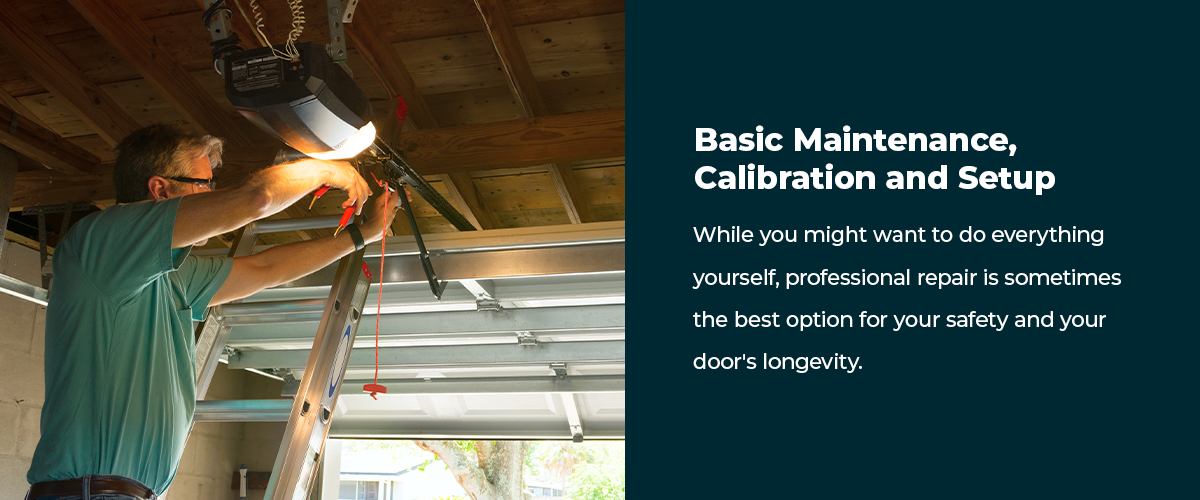
Leave spring adjustment, cable work and major repairs to professionals. Springs store tremendous tension and can cause serious injury if mishandled. While you might want to do everything yourself, professional repair is sometimes the best option for your safety and your door’s longevity.
Frequently Asked Questions
Review these common questions about garage door openers for more information.
Why Does My Opener Hum but Not Move the Door?
This issue typically indicates a failed capacitor in AC motors or a disengaged trolley. Check if the emergency release cord was pulled. If the trolley is engaged and the motor still hums, you likely need a capacitor replacement.
How Long Should a Garage Door Opener Last?
Most quality openers last 10 to 15 years with proper maintenance. Factors affecting lifespan include frequency of use, maintenance habits and door balance.
Can I Add Smart Features to an Old Opener?
Some older LiftMaster models can be upgraded with retrofit kits that add Wi-Fi connectivity. If your opener is more than 15 years old or lacks modern safety features, replacement is often the better choice.
Contact idcAutomatic for Professional Garage Door Opener Service
Knowing how a garage door opener works is the first step to staying ahead of issues and mitigating potential safety risks. When you need repairs or an upgrade, you’ll require the expertise of trained professionals. That’s where the team at idcAutomatic comes in.
We’ve been serving the Minneapolis and Twin Cities area since 1974, offering same-day service and a recall rate of less than 1%. Our knowledgeable technicians handle everything from opener repairs to complete installations. Contact us today for expert garage door opener service or to schedule maintenance that keeps your system running smoothly.